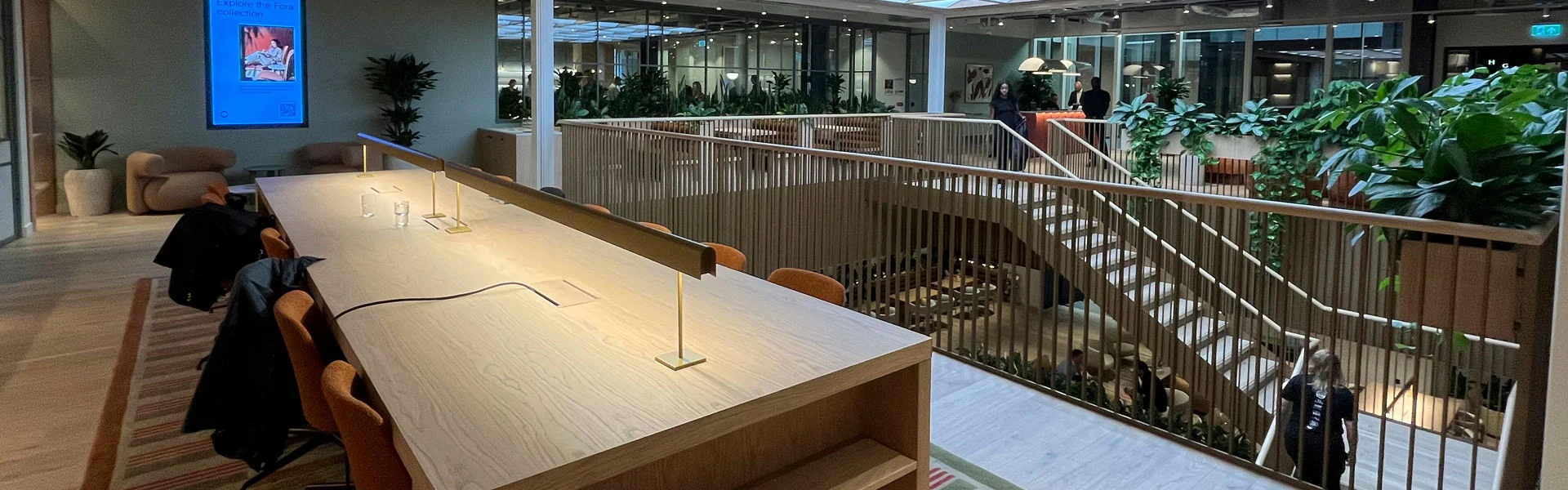

The Ultimate Guide To Serviced Offices in London
Serviced offices in London are fully furnished workspaces you can rent through flexible licence agreements instead of long leases. Providers offer private suites in shared commercial buildings, such as converted warehouses, Victorian townhouses, and modern glass-fronted blocks in the City and West End. The monthly fee usually covers rent, business rates, utilities, furniture, shared internet, cleaning, and reception services. You move into ready-to-use offices with desks, chairs, lighting, and meeting rooms already set up. The provider is responsible for the building and shared spaces. However, you might have less control over branding and office design than with traditional leases, and serviced offices can cost more over longer periods.
What Are Serviced Offices?
A serviced office is a private workspace within a building, operated by a workspace provider. Instead of a traditional lease, you sign a licence agreement. The office is ready from day one with desks, chairs, and storage in place. The internet is already connected. Shared kitchens and toilets are looked after by the operator. You pay one monthly fee.
The term fully serviced office means the same thing. It refers to a workspace where rent and main building costs are combined into a single charge. Serviced offices are also called flexible office space or flexible workspace.
How Do Serviced Offices Work?
The provider owns or leases the building and divides it into private suites and shared areas. Businesses pick a suite based on their team size. They agree on a term, usually between six and thirty-six months. Shorter terms may be available, but often come with higher monthly costs.
You usually pay a deposit equal to two or three months’ fees. After that, you pay a fixed monthly amount. This fee typically covers rent, business rates, utilities, cleaning, and shared internet. The provider is responsible for the common areas and building services.
Once the minimum term ends, you follow the notice rules in your agreement to leave. Unlike a traditional lease, you won’t have to handle long-term structural repairs or formal dilapidation claims.
What Is Included In Serviced Offices?
Most serviced offices include the workspace, so you don’t have to look for premises, furniture that removes the upfront cost of desks and chairs, and access to shared facilities that save you from maintenance hassles. Rent and business rates are combined into a single fee, making budgeting and invoicing easier. Electricity, heating, and water are covered, so you avoid utility contracts and fluctuating bills. Shared internet is provided without separate contracts or installation delays. Cleaning of common areas is included, freeing up staff time and maintaining a professional space. Reception staff handle mail and welcome visitors, so you don’t need to hire admin support and can make a good first impression.
Meeting room use is often included up to a monthly limit, with extra hours usually costing more. Dedicated leased lines, extra storage, and parking are often charged separately. There may also be less obvious add-ons, such as printing and copying fees, mail handling, secure shredding, administrative support, and even charges for registering additional companies or receiving large parcels. Since each provider offers different packages, it’s important to review proposals carefully and ask for a full breakdown of all potential costs upfront.
When comparing options, check what’s included in the monthly fee, how reliable the building services are, how flexible the contract is, and any extra charges that might apply. It helps to ask providers direct questions like:
When reviewing a serviced office proposal, clarify whether the internet connection is dedicated or shared and ask about expected speeds and uptime. Confirm whether any additional charges apply, including setup fees, mail handling costs, meeting room usage or printing. Check the notice period and whether any break provisions apply if you need to leave early. Ask how frequently the common areas are cleaned and maintained. Finally, confirm whether reception and security services are included and the hours during which they operate.
Asking these questions upfront helps you compare offers more accurately and avoid surprises later.
Why Serviced Offices?
Businesses choose serviced offices to avoid long-term commitments. Traditional leases often last five to ten years and require legal advice plus upfront fit-out costs. Serviced offices shorten that commitment and lower upfront spending. For founders in fast-changing markets, this model lets you test business ideas and adjust your workspace with minimal risk. This allows businesses to test growth plans without incurring long-term contractual commitments.
This model suits companies expecting change. Team sizes may grow or shrink, and market conditions can shift. Shorter agreements reduce risk if plans change. Moving in is faster, too—many teams settle in within weeks rather than months.
Are Serviced Offices Cheaper Than Leasing?
When looking at cost per square foot, serviced offices often seem more expensive. Rent per desk is usually higher than with a long lease. But leases come with upfront costs for design, furniture, cabling, and professional fees. They also include repair responsibilities and possible charges at the lease end.
Leasehold space often requires additional capital for design, furniture, connectivity and professional fees. These costs vary widely depending on the specification and the building’s condition.
For shorter stays, serviced offices can be financially similar once you consider these factors. For stable, long-term use, a traditional lease might be cheaper. The best choice depends on how long you need the space and how comfortable you are with risk.
Serviced offices often work best for stays of up to two or three years, especially when flexibility matters. This timeframe often aligns with early-stage growth or market entry phases. Planning your office around these growth phases can help you align workspace commitments with your business goals.
It’s also important to understand how the exit process works. Most providers ask for written notice, usually 1 to 3 months after the minimum term. You generally return the space in reasonable condition, taking normal wear and tear into account. The agreement should clearly explain any notice rules or end-of-term fees. Common exit charges include cleaning fees and removal of signage, and may apply for damage beyond fair wear and tear or for agreed reinstatement works. Sometimes there are fees for unreturned keys or access cards. Checking for these charges ahead of time helps you plan your budget and avoid surprises when your agreement ends.
Who Uses Serviced Offices?
Startups use serviced offices to avoid upfront costs and start trading quickly. Small and medium businesses choose them to stay flexible as their teams grow or shrink. International companies use them when entering the UK market. Established firms use them for project teams or temporary moves.
Many technology, professional services, and growth-stage firms still use serviced offices in London for shorter commitments and flexible operations.
What Is The Difference Between Serviced & Managed Offices?
A serviced office is pre-built and ready to use, with a mostly fixed layout and a shorter term. You can usually make only modest cosmetic changes in a serviced office, such as bringing in company signage or portable branding elements inside your own suite, but changes to the overall fit-out, paint colours, or layout are generally not allowed. In contrast, a managed office has a custom fit-out inside a building run by a provider. Here, occupiers commit for a longer time, often 3 to 5 years, and have much more control over both layout and branding. This can include choosing finishes, altering layouts, and adding company colours or graphics throughout the space. Managed space falls between a serviced licence and a traditional lease in terms of structure and commitment.
What Is The Minimum Term For a Serviced Office?
Minimum terms usually range from six to twelve months. For example, a six-month term often suits pop-up projects, short campaigns, or trial periods, while a twelve-month term works well for product launches, growing teams, or branches needing time to assess their space needs. Some providers offer shorter rolling agreements, but at higher rates. Longer commitments often get better pricing, depending on the building and market.
Can You Negotiate Serviced Office Prices?
Yes. Pricing depends on the term, building occupancy, and market conditions. Instead of seeing negotiation as haggling, think of it as a joint effort to find mutual value. Providers are often open to flexible solutions—like better rates for bigger suites, longer commitments, or adding services that matter most to your team. Providers may offer incentives depending on term length, suite size and market conditions. It is reasonable to discuss commercial terms before signing. Timing can also affect the terms you get.
To Negotiate More Effectively, Consider These Strategies:
Request rent-free periods, reduced deposits, or flexible move-in dates as part of your negotiation. These can result in some of the most significant overall savings for your business.
Ask about discounts during periods of low occupancy or at the end of the month or quarter, when providers may be more motivated to make deals.
See if you can bundle services, like meeting room hours or extra storage, for a lower overall price. If you’re willing to sign for a slightly longer term, ask for added perks like free upgrades or extra amenities.
Let providers know you are comparing multiple options, which can encourage them to improve their offer.
By raising these points, you can often secure a better deal and tailor the contract to fit your needs better.
Ready To Take The Next Step?
Explore our comprehensive listings of serviced offices in London and discover the perfect workspace for your business. Whether you need a single desk or a fully equipped private office, we’re here to help. Browse our website or contact us at 020 3838 2008 for a FREE workspace report.