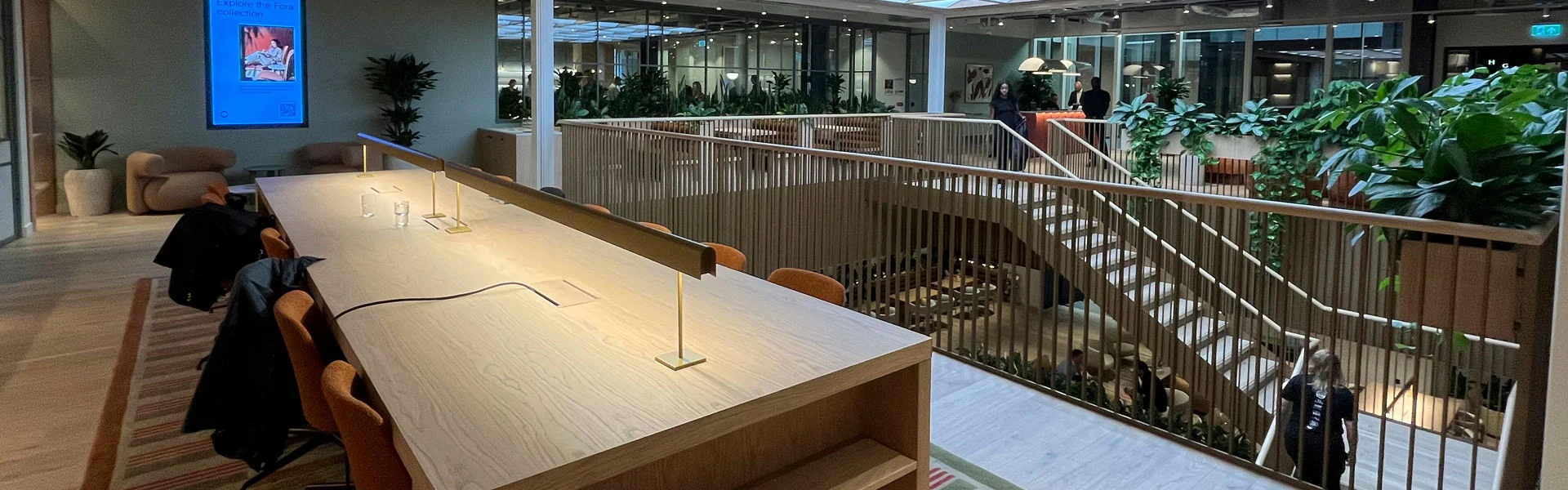

What is Activity Based Working
Businesses are moving away from filling offices with cubicles, but will workers eventually abandon physical workspaces altogether?
A February 2016 British Council for Offices (BCO) report predicted that by 2020, nearly 50% of workers would be freelancers or sole traders. Consequently, businesses are exploring alternatives to housing staff in a single physical location.
How the Activity-Based Working Model Shapes Future Office Spaces

Making Office Efficiency Savings
With prices averaging £56.06* per square foot in parts of London, many companies consider office space costs a major factor in location decisions, with some relocating further out to save significantly.
Simon Carter, Head of Corporate Property at National Grid, highlighted the benefits of optimising space in his BCO Intelligent Space report. Phase 1 delivered £8-10M in annual operational cost reductions, partly by reducing workspace per employee from 11 to 8 sqm. A year later, productivity increased by 8% across four redeveloped buildings. Staff and visitor feedback also emphasised the need to enhance brand visibility and the National Grid story.
The size of your office space is one of the first things to consider when relocating your business or renewing the office lease. The right office size helps your employees stay productive and efficient and supports future business growth.
To determine your space needs, first understand how employees will use it. Consider your business objectives and the purpose of your relocation or redesign. This clarity will guide the amount of space you require.
What Are the Minimum Workspace Requirements?
The UK requires a minimum of 6 sqm per office worker, though many companies prefer 12-14 sqm. These figures cover the total floor area and exclude kitchens, bathrooms, corridors, meeting rooms, mailrooms, communications rooms, and utility rooms. These are general estimates; please consult us to determine the best space for your business.
Before starting a redesign, consider the following:
- What types of tasks do your employees perform, and how much time do they spend at their desks each day?
- Will you use activity-based working, open-plan workstations, cubicles or private offices?
- How much storage space does the business require?
- Are you hoping to improve staff productivity?
- Are you looking to reduce building management costs?
- How does this enhance collaboration between teams?
- How many meetings take place in your company?
- How large are the meetings, and what technology is required to maximise their efficiency?
Planning for the Future with Activity-Based Working
In addition to current needs, consider your business’s future space requirements. Commercial leases often last five to ten years, so ensure you have the capacity for growth. Also, plan for changes like mergers, downsizing, or restructuring that affect team sizes.
The space you need for technology is likely to change in the future. Your technology space needs may change, especially if you plan to move to the cloud or relocate your data centre off-site. Considering your business’s outlook over three, five, or ten years helps you select flexible office space that can adapt as you grow. If you are looking for office space in London, we can show you a variety of flexible workspaces throughout the City.